Power of Attorney vs a Will: What Is the Difference?
Jun 13, 2026People often lump them together, but a will and a power of attorney do very different jobs, and at different times. Understanding the difference is one of the simplest ways to spot a gap in your own planning.
A will is for after you die
Your will only takes effect once you have passed away. It says who should receive what, names an executor to carry it out, and can record your wishes for things like guardianship of children. Until then, it does nothing at all.
A power of attorney is for while you are alive
A power of attorney is the opposite: it operates while you are alive, in situations where you cannot make or communicate decisions yourself, such as a serious illness or accident. It lets someone you trust step in and act on your behalf. There are generally different kinds, often covering financial and property matters separately from personal, lifestyle or medical decisions, and the names and rules for these differ between states and territories.
Why the gap matters
Here is the part many people miss. If you have a will but no power of attorney, and something happens that leaves you unable to manage your own affairs, your will cannot help, because you have not died. Without the right authority in place, your family may have to apply to a tribunal or court before they can act for you, at the very moment speed and calm would matter most.
What to do about it
Putting a power of attorney in place is a legal task, and the right arrangement depends on your situation and your state, so it is one to set up with a solicitor or your state's relevant office. It is often quicker and simpler than people expect.
And once these documents exist, the people who may one day rely on them need to know they exist and where to find them. That is where The Estate Organiser helps: a single place to record your will, any powers of attorney, and everything else your family would otherwise have to hunt for.
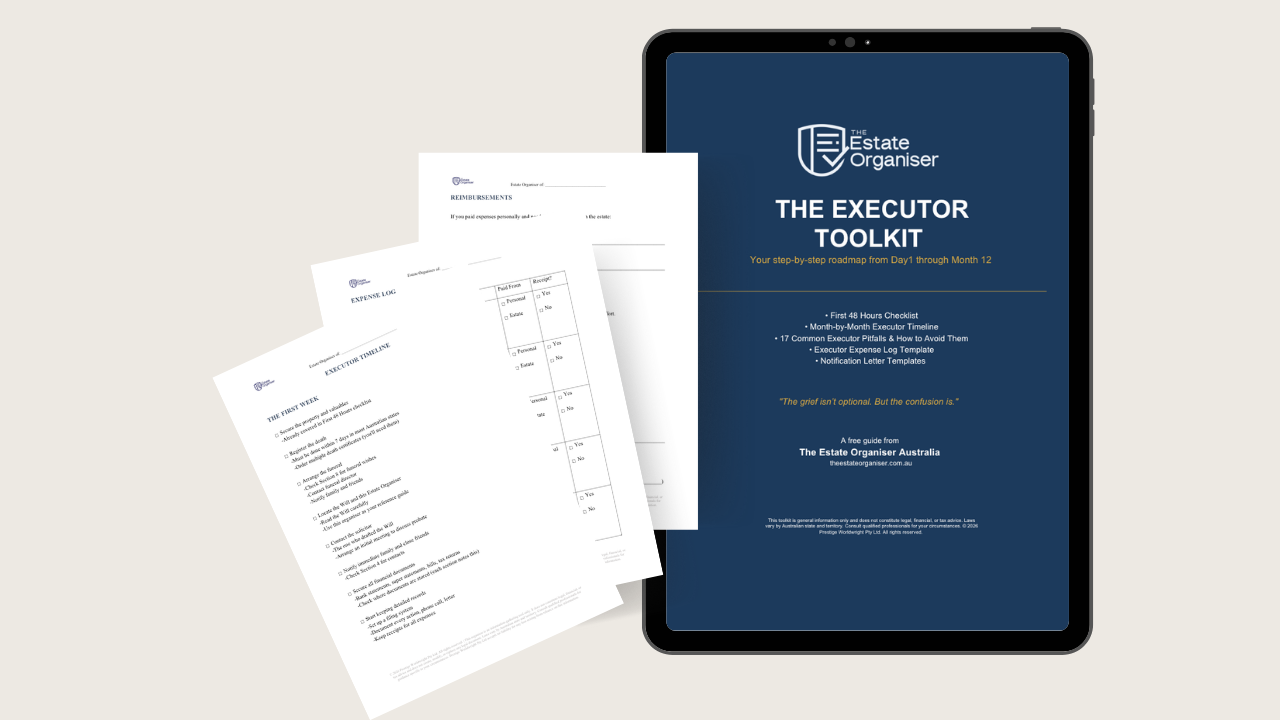
Start with the free Executor Toolkit here.
Educational content only. Not legal, financial or tax advice. Estate laws vary across Australian states and territories. Always consult a qualified professional about your specific situation.
Lorem ipsum dolor sit amet, consectetur adipiscing elit. Cras sed sapien quam. Sed dapibus est id enim facilisis, at posuere turpis adipiscing. Quisque sit amet dui dui.
Stay connected with news and updates!
Join our mailing list to receive the latest news and updates from our team.
Don't worry, your information will not be shared.
We hate SPAM. We will never sell your information, for any reason.